Showing posts with label Margaret Sullavan. Show all posts

Wednesday, December 14, 2011

Summer Under the Stars 2011 -- Day Twenty-Four Review: Cry 'Havoc'

War films about women that came out in the forties have one major leg up (no pun intended) on war films about men that came out around the same time: to put it simply, the women are allowed to hate each other. Perhaps it's because Hollywood viewed men and women so differently, or perhaps because they didn't want to confuse audiences by drawing a firm line between American soldiers and their enemies and then throwing too much inter-American conflict into the mix, but whereas the conflict between male soldiers is usually contained to big-topic disagreements about class or ethnicity (or something comparable), women in these sort of movies often dislike each other because, well, they just do. In some ways, this makes World War II films about women easier to understand today, because we're able to relate to them in a manner more intimate than history or war; it certainly helps Cry 'Havoc' and So Proudly We Hail!, two films released in 1943 that were based on the real-life ordeals of the nurses stationed in Bataan during the Japanese sweep down the Pacific during the early part of the war. Neither film pulls any punches in portraying the hardships the women face, but both also heavily concern themselves with the everyday drama between their characters.  

The main conflict in Cry 'Havoc' occurs between Ann Sothern's character Pat and...well, just about every other woman in her group of nurses, but especially Lieutenant Smith, played by Margaret Sullavan in her second-to-last film role. Pat is supposed to be a variation on the sort of tough-talking-broad-with-a-heart-of-gold Sothern frequently played during the early forties, but more often than not she just comes off as a bitch, as when she needlessly victimizes a former cosmetics saleswoman (Ella Raines) who's crumbling under the pressure of being a nurse. You see, the basic story in Cry 'Havoc' is that a rag-tag group of women have come to the island of Bataan to volunteer their services as army nurses, despite their not having any experience with medicine or the military, and Sothern's Pat has it out for just about everybody, from the fellow nurses she feels aren't rising to the occasion to the higher-ups -- like Lieutenant Smith -- who try to give her orders. Complicating matters further, she soon falls for Lieutenant Holt, the communications officer who also happens to be Lieutenant Smith's secret husband (secret because military regulations during WWII forbid fellow officers from marrying.)

Joan Crawdord allegedly turned down a role in Cry 'Havoc', dismissing it as "The Women Go to War," and she may have had a point: like The Women, the sharp-tongued 1939 comedy that costarred Crawford and explored the complex (and sometimes conniving) relationships between modern women, there are no male characters on-screen in Cry 'Havoc,' aside from a few dying soldiers; the oft-discussed Lt. Holt is only seen once, from a distance, and when he eventually dies and Lt. Smith and Pat are forced to come together in their mourning, we don't even have a face to attach to his name. This no-men gimmick works in The Women, where the way women pick at each other in regards to men is sort of the point, but in Cry 'Havoc,' it really only serves to bring the drama between the women so much into the foreground that the story consists of little else. War-related things occur, of course, and the ultimate point is that the women need to put their personal differences aside in order to be successful nurses, but when I think about Cry 'Havoc,' two things stick out to me: the women are tired (understandably), and Pat and Lt. Smith fight over a man.

So Proudly We Hail! has even more to do with war-time romance than Cry 'Havoc,' with separate storylines for lead actresses Claudette Colbert, Paulette Goddard, and Veronica Lake, and yet it manages to mix the themes of love and war together in such a way that neither finds itself trumped by the other. The nurses in Hail! are just as prone to infighting as the women in Havoc, with Lake taking up the part of the odd woman out, who won't talk with the other nurses or even let them borrow her jewelry, but in a twist from the pattern set forth in Havoc, their bickering subsides as men enter the picture (literally, since we get to see the men here) and the rigors of war become more demanding. Ironically, the more the women talk about, think about, and interact with their men, the more we see them as people separate from their men, as flesh and blood humans with distinct personalities and motives, just as in real life. When we find out why Lake's character is so hostile to the other nurses, we have sympathy for her, or at least more sympathy than we can spare for Pat in Havoc when she realizes she's been throwing herself at another woman's husband.  

Hail is the lighter of the two films but also probably the better of the two, because despite its emphasis on romantic storylines, it has genuinely exciting and well-filmed battle scenes and keeps the story moving at a brisk but never skimpy pace, utilizing flashbacks along with a few surprise twists and deaths. Havoc started as a play and feels like a play, spending an inordinate amount of time in the women's bunker, and though its ending is more nihilistic and perhaps more realistic than the ending of Hail, it has far too many supporting characters, so many that by the film's conclusion I still couldn't identify some of the characters by face or name. (Hail keeps its focus on a select few and is all the better for it.) Cry 'Havoc' is quite a good movie, with an especially good performance from Margaret Sullavan, but it never strikes the right balance between humor, romance, action, and drama, whereas So Proudly We Hail! manages to meet all the criteria of a forties' war film while still adressing the specific concerns of the women it set out to portray.

Grade: B+

Wednesday, November 9, 2011

Book Review: 'Haywire' by Brooke Hayward

It would be easy to lump Brooke Hayward's 1977 memoir Haywire into the rush of "shocking" tell-all books that came out in the late seventies and early eighties, written by the children of classic Hollywood stars -- among them Christina Crawford's infamous Mommie Dearest -- but to do so would be a mistake, because Haywire is neither a tell-all nor a drubbing of Hayward's parents, agent Leland Hayward and actress Margaret Sullavan. Rather, the Newsday quote on the back cover of the 2010 edition of the book that describes the memoir as Fiztgeraldian, "with the glow and the glamour, and finally, the heartbreak," is a much better summation, because Hayward's motivation in writing Haywire was not to criticize her mother or father but simply to chart -- and, perhaps, understand -- how the idyllic existence she knew as a child fell apart by the time she was twenty-five.

A little background information: I decided to read Haywire primarily because Hayward's mother, Margaret Sullavan, is one of my favorite actresses, and because Sullavan's life ended so tragically and mysteriously at the age of fifty-one: she might have killed herself, and then again she might not have -- her death from an overdose of barbiturates might well have been accidental. Anyone hoping to find clues to the nature of Sullavan's death in Haywire will be sorely disappointed, however, because Hayward makes it quite clear from the beginning of the book that she won't ever be certain how her mother died, nor does she have any answers as to the death of her younger sister Bridget, who died nine months after Sullavan, also from an overdose. These two events act as the starting-place for Haywire, which goes back in time to describe Hayward's early life and investigate how the seeds of her family's tailspin were planted long before her parents' divorce in 1947. What you find in Haywire is a story that really is quite similar to an F. Scott Fitzgerald novel, not only in its theme of paradise lost but also in the way it struggles to find a reason for all its destruction without ever quite providing one. The Haywards suffered a run of bad luck, certainly, but in the end they destroyed themselves mostly because, well, they just did.

The crux of the story is the marriage between Sullavan and Leland Hayward, consisting as it did of two people very much in love who were ultimately extremely ill-suited for one another. Leland Hayward was the ultimate Hollywood agent, a wheeler-dealer who represented the likes of Fred Astaire, Ernest Hemingway and Greta Garbo, and was never happier than when he had a phone pressed to his ear; Margaret Sullavan, as I've already talked about on this blog, was almost an anti-star, a wonderful actress who nevertheless pretended to be someone else when fans approached her for autographs and whose dream was to raise her family out in the country, far away from anything outwardly "Hollywood." The fact that they remained married for eleven years is a feat all its own, yet what Brooke Hayward seems to suggest in Haywire is that if her parents had only reigned in their idiosyncrasies -- Sullavan her pride; Hayward his restlessness -- a bit when their marriage hit a rough patch in the late forties, they might have remained married another eleven years, and the trouble that followed their divorce might have been avoided. Then again, maybe not: mental instability definitely ran in the Hayward family, with Sullavan, Bridget, and the youngest child, Bill, all spending time in mental institutions, so some of the problems they encountered after the divorce might have been unavoidable.

Hayward is a sharp, talented writer, and part of what makes Haywire so readable is that rather than using her ability to build up the memoir into peaks and valleys of salacious revelations, she creates a rich, even narrative that reflects the wholeness of the world in which she grew up. She occasionally skimps on details -- I felt like there had to be something she wasn't saying in regards to her brother's stay in his mental institution, because although she seems to accept his explanation that their father put him in there more out of exasperation than a real need for mental evaluation, she also makes no move to help get him out -- but her balanced portrayal of everyone in her life ultimately serves her well, making Haywire seem informative rather than gossipy. It also doesn't hurt that, no matter how dramatic the Haywards' lives ended up being, there's not a lot for Brooke Hayward to gossip about in the first place: the Haywards, probably largely because of Margaret Sullavan's influence, were a surprisingly "normal" family, albeit a normal family that ultimately went off the rails, as normal families are wont to do.

Thursday, September 22, 2011

Same Name, Different Face: The Ladies M

Today's edition of Sam Name, Different Face is a real doozy, as it features four different actresses with similar names: Margaret O'Brien, Margaret Sullavan, Maureen O'Sullivan, and Maureen O'Hara. Complicating things further is the fact that none of them were extremely big stars -- O'Brien sort of was, as the era's second most popular child actor behind Shirley Temple, but even she never attained Temple-like icon status -- and none of them were stars much beyond 1965. They were, however, all marquee names at one time or another, and they were also all involved in multiple films that have stood the test of time -- more so, I would say, than the past Same Name, Different Face duo of Van Johnson and Van Heflin. My guess is that most people have seen at least one Maureen O'Hara film, regardless of whether or not they know who she is, and you don't have to delve very far into classic cinema before you run into the other three, and run into them many times over. The real problem is telling them apart, and thus, without further ado...Same Name, Different Face:

Margaret O'Brien

Margaret O'Brien was the World War II era's answer to Shirley Temple, after Temple had grown up and started playing teenage roles in films like Since You Went Away. Just as adult stars during the war years were made to seem more grounded than the glamorous stars of the Depression years, O'Brien was less cherubic than Temple and more identifiable to audiences as a "real girl": brunette and freckle-faced, her characters were less prone to sing and dance than to have crying jags, some warranted (as in Journey for Margaret) and some not (Meet Me in St. Louis, where she plays Judy Garland's bratty younger sister, Tootie). Like most kids, she had a slight speech impediment when she was younger that can occasionally make her seem overly precious, and I've always considered her character in Meet Me in St. Louis to be one of the most irritating put on screen ("You mean she accused her sister's boyfriend of assault and then admitted it was all a lie? OH THAT TOOTIE"), but she was undeniably a talented actress, and I'm surprised she didn't have much of a career after the forties, especially considering she was beautiful as an adult. Her last major role was in the 1949 version of The Secret Garden, although she continued to work in TV and frequently collaborates with TCM, being one of the few remaining stars from the studio system still alive and granting interviews.


Margaret Sullavan

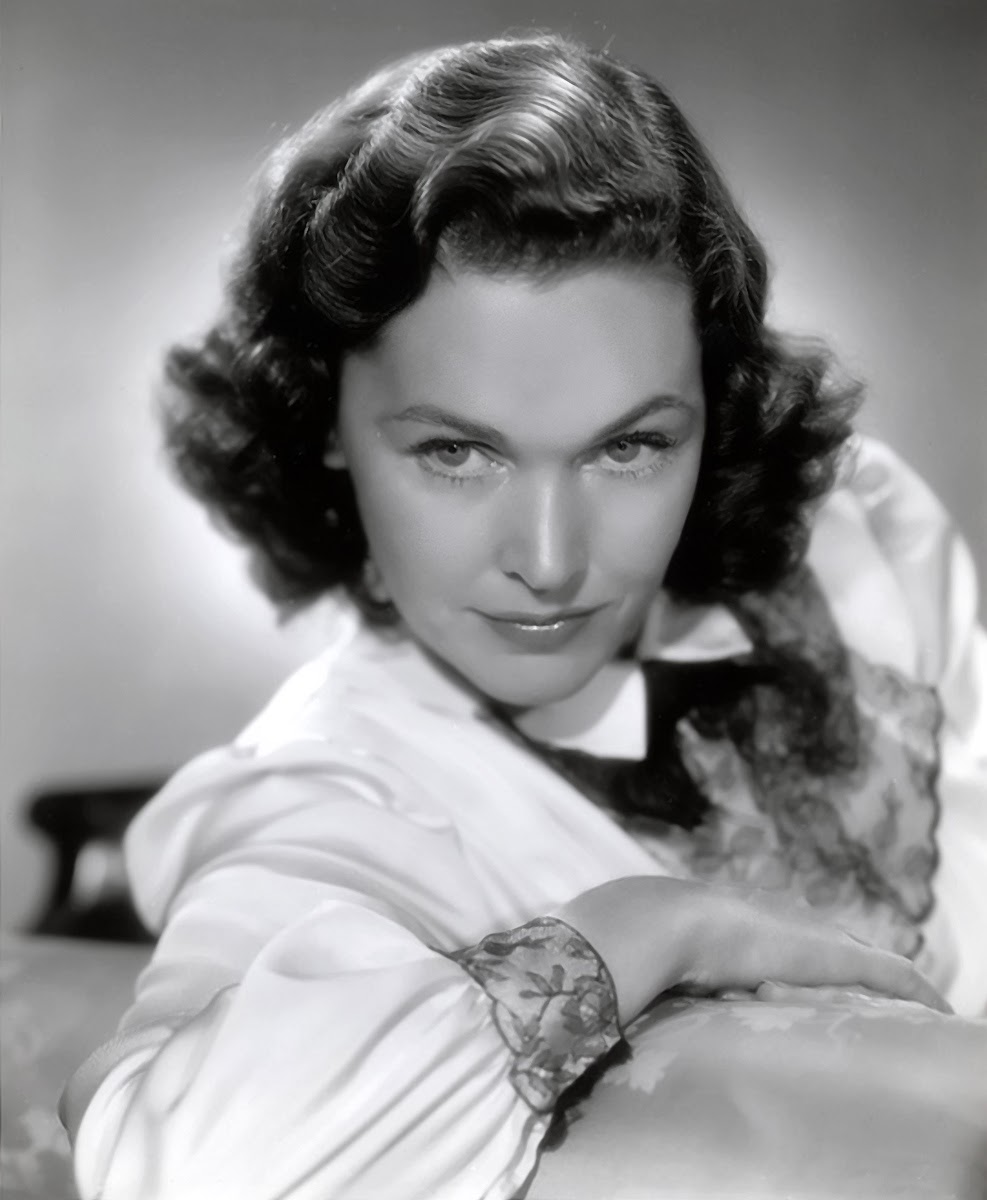
Sullavan is perhaps the least well-known of the four women featured in this list, which is unfortunate, because for my money she's the best actress of the bunch and the one with the most unique persona, despite making only sixteen movies throughout her career. Like Vivien Leigh, she was primarily a stage actress who could be prickly about the Hollywood system, which explains her low film output, but also like Leigh, she had such a powerful screen presence that nearly every one of those sixteen roles is highly regarded. She wasn't particularly beautiful when compared with actresses like Lana Turner or Rita Hayworth, whose faces were so symmetrical that every photo of them turned into a glamour shot, but to say that she was plain isn't true, either: in motion, she was beautiful, with large expressive eyes that conveyed more than I've seen Turner or Hayworth give with their entire bodies. One of the most indelible images I've seen on film in the past few years is the shot of Sullavan in The Shopworn Angel after her character finds out her husband has been killed in the war, and she has to go on singing the patriotic anthem "Pack Up Your Troubles in Your Old Kit-Bag, and Smile, Smile, Smile."


Eyes aside, most people would probably agree that Sullavan's most distinctive feature was her voice, which manages to be both husky and musical at the same time and really has to be heard to be understood. As much as I love classic movie actresses, I am the first to admit that they can be rather...shrill...at times, so whenever one comes along with a lower-register voice, she automatically seems to have a leg-up in being taken seriously (we still do this today, really -- think about Emma Stone versus a squeaker like Anna Faris). Of course, with Sullavan, she was also taken seriously because she was a good actress, and because she could play both comedy and drama, often within the same film, not by swinging from one extreme to the other but by existing somewhere in between at all times, more like people do in real life. Sullavan had that rare ability to connect with viewers on a human level, to break their hearts or make them laugh not through the overwhelming force of her acting but because everything she was feeling seemed to be real. Sullavan had a hard life -- she suffered from bouts of depression, became estranged from her children and began to go deaf at a very early age, all of which contributed to her apparent suicide in 1960 at the age of fifty -- but few actors have so spotless a film record, and it's not hard to separate her off screen troubles from the skill she evidences on screen.


Maureen O'Sullivan

In contrast to Margaret Sullavan, Maureen O'Sullivan was one of the most prolific actresses of the thirties, making 43 films between 1930 and 1939, eight of them in the year 1932 alone. Born in Ireland, she actually didn't have a strong Irish accent and played a number of American and British ingenue roles at the beginning of her career, the most famous of which is Jane Parker in the original Tarzan film, a role she reprised multiple times over the course of the next decade. She usually headlined smaller films while acting as a supporting player in bigger pictures, but because of the sheer number of films she made she was able to try her hand at just about every genre, and demonstrated a surprising deftness in just about all of them: adventure (Tarzan), drama (The Ballad of Bugle Ann), theatrical adaptations (Payment Deferred), literary adaptations (David Copperfield; Anna Karenina; Pride and Prejudice), horror (The Devil Doll), comedy (A Day at the Races), romantic comedy (Hold That Kiss), and westerns (The Tall T). She tends to get overlooked in discussions of great actresses because she never played a really stand-out, performance-heavy part, but she was always graceful and completely natural on screen; moreover, it may have been to her benefit that she never became a superstar, because she was able to take long breaks from film at various points in her career only to return and find work again. She was a devout Catholic and had seven children with director John Farrow, and one of her last roles was with her daughter Mia Farrow in Woody Allen's Hannah and Her Sisters. She and Margaret Sullavan both rate as two of my favorite actresses of all time, and although I'd give Sullavan the edge in terms of acting ability, I can also say that I've genuinely enjoyed O'Sullivan in every movie I've seen her.


Maureen O'Hara

Maureen O'Hara is probably the most recognizable of this group today, both because of her bright red hair and her inclusion in multiple films that have remained popular with modern audiences: the original version of The Parent Trap, the Christmas classic Miracle on 34th Street, and John Wayne westerns like The Quiet Man and McLintock!  Like Maureen O'Sullivan, O'Hara was born in Ireland, but because of the color of her hair and her thicker accent, she was afforded a more eclectic range of roles than O'Sullivan, especially in westerns and adventure films like Black Swan. She was exquisitely beautiful and slightly younger than many of her contemporaries, and although I don't like the phrase "fiery redhead," that's really the best way to describe her persona: she played a lot of headstrong, passionate women, different from fellow redhead Rita Hayworth in that she wasn't also a femme fatale. Her characters, whether hailing from Ireland or the Old West, were rustic types, and her friendships with men like John Wayne and John Ford undoubtedly boosted her longevity, affording her a place in a genre that had room for female leads past the age of forty.


Thursday, September 8, 2011

Summer Under the Stars 2011 -- Day Thirteen Review: The Shop Around the Corner

Contrary to what many people seem to believe, film remakes are neither a modern innovation nor always a terrible idea, even as crappy remakes like The Heartbreak Kid (2007) and The Women (2008) seem to point to the contrary. Hollywood studios have always recycled films; if anything, we have more reverence for "originals" today than they did seventy years ago, when producers thought nothing of remaking films that had come out less than ten years before. Think of Waterloo Bridge (1931 and 1940); When Ladies Meet (1933 and 1941); and The Unholy Three (1925 and 1930). In many of these cases -- Waterloo Bridge is a good example -- the remake is generally considered better than the original, either because filmmaking techniques had advanced or because the story had enough clout from the first time around to attract bigger actors, writers and directors. I don't mean to suggest that all remakes are better -- just look at Weekend at the Waldorf (1945) and Grand Hotel (1932) -- but I am suggesting that remakes, in and of themselves, are not inherently a bad idea. They simply become bad ideas when producers choose the wrong films to revisit.

And what are the wrong films, exactly? I would argue that anything iconic (Gone with the Wind; Casablanca) is a no-go, as is anything that is very story-driven, with a specific time and place that are essential to the plot (Psycho). I think studios should avoid films that are intrinsically tied to their original stars (Astaire and Rogers musicals), as well as films that made a strong cultural statement (The Graduate). Why anyone would want to touch films that are generally loved and lauded in their original forms (Now, Voyager) is a mystery to me. That being said, there are a number of films I do think are ripe for remaking, particularly films that weren't very good the first time around (this is why the Ocean's Eleven remake worked so well) or films whose stories suddenly seem relevant again, though in a different way (I think the WWII drama The Best Years of Our Lives could act as the basis for a great post-9/11 film). In general, films with simple plots are the easiest to remake, because the rest of the story can be flipped and stretched and changed in such a way that the new film almost becomes its own entity, the much-seeked and but rarely-attained "reinterpretation."

Think about it in terms of literature: Romeo and Juliet has been told a hundred, maybe a thousand, times over because at its core its plot is nothing more than "Boy and girl from feuding families fall in love." The rest of the story -- the plague; the apothecary; the Capulets and the Montagues -- is incidental. Maybe the families aren't families, but countries; maybe they're spaceships; it doesn't matter. As long as you retain the plot, the way you choose to tell the rest of the story is up to you -- you're still "remaking" Romeo and Juliet (or, rather, the myths and stories that preceded and undoubtely inspired Shakespeare). This is what people mean when they say "universal plot," and it's the real reason it would be a terrible idea to remake something like Gone with the Wind: the plot is not simple, and even when reduced to its simplest terms, it is extremely specific -- you need the Civil War; you need Tara. The only reason to remake a movie like that is because you believe the original is somehow lacking, and that you could do better, and if that's the case...well, good luck.

The Shop Around the Corner, released in 1940 and directed by Ernst Lubitsch, is a good example of a film that does stand up to a remake, and in fact has been remade twice already, as a musical starring Judy Garland in 1949 (In the Good Old Summertime), and as a romantic comedy starring Tom Hanks and Meg Ryan in 1998 (You've Got Mail). The Lubitsch version is itself an adaptation of a 1937 play by Miklos Laszlo entitled Parfumerie, and the plot could not be simpler: two people (James Stewart and Margaret Sullavan) hate each other by day even as they're unwittingly falling in love as pen pals. That's it. The fact that in The Shop Around the Corner they happen to be coworkers living in Budapest during the Christmas holidays is irrelevant to retelling the story, though those details certainly make the film more enjoyable to watch. It might not really matter that The Shop Around the Corner is set in Hungary -- the location certainly doesn't affect the story in any way, evidenced by In the Good Old Summertime's location in Chicago and You've Got Mail's location in New York -- but it gives the film a distinctive atmosphere, as if everything we're seeing is taking place inside a snow globe right before someone tips it upside-down.

Much of the film's magic rests on the shoulders of Stewart and Sullavan, a frequent onscreen couple who also appear together in Next Time We Love (1936), The Shopworn Angel (1938), and The Mortal Storm (1940). They're an unusual pair in that MGM didn't attempt to capitalize on their chemistry by casting them in the same parts over and over again; rather, each of the four films they made is unique, and generally does not end with the two stars in a loving embrace -- The Shop Around the Corner is the exception here, not the rule. I'm ambivalent toward Stewart -- I like most of his films, and I think he's a good, though repetitive, actor -- but I love Sullavan, who preferred stage work and made relatively few films but has shone in every single one I've seen. She grounds The Shop Around the Corner -- she makes it real -- yet simultaneously elevates it through her soft eyes and distinctive voice; she plays comedy without once resorting to battiness, a real feat for an actress of her generation, and she makes us feel every ounce of longing and disapointment hidden in the barbs she shoots at Stewart's character. I don't know that I'd call The Shop Around the Corner my favorite of her collaborations with Stewart -- The Shopworn Angel is a lesser film, but one I found more affecting overall -- but it is certainly a wonderful film, and one that I think could be remade ten times over, whether it's set in China or in the middle of Small Town, USA (speaking of things that exist in a snow globe).

Grade: A